
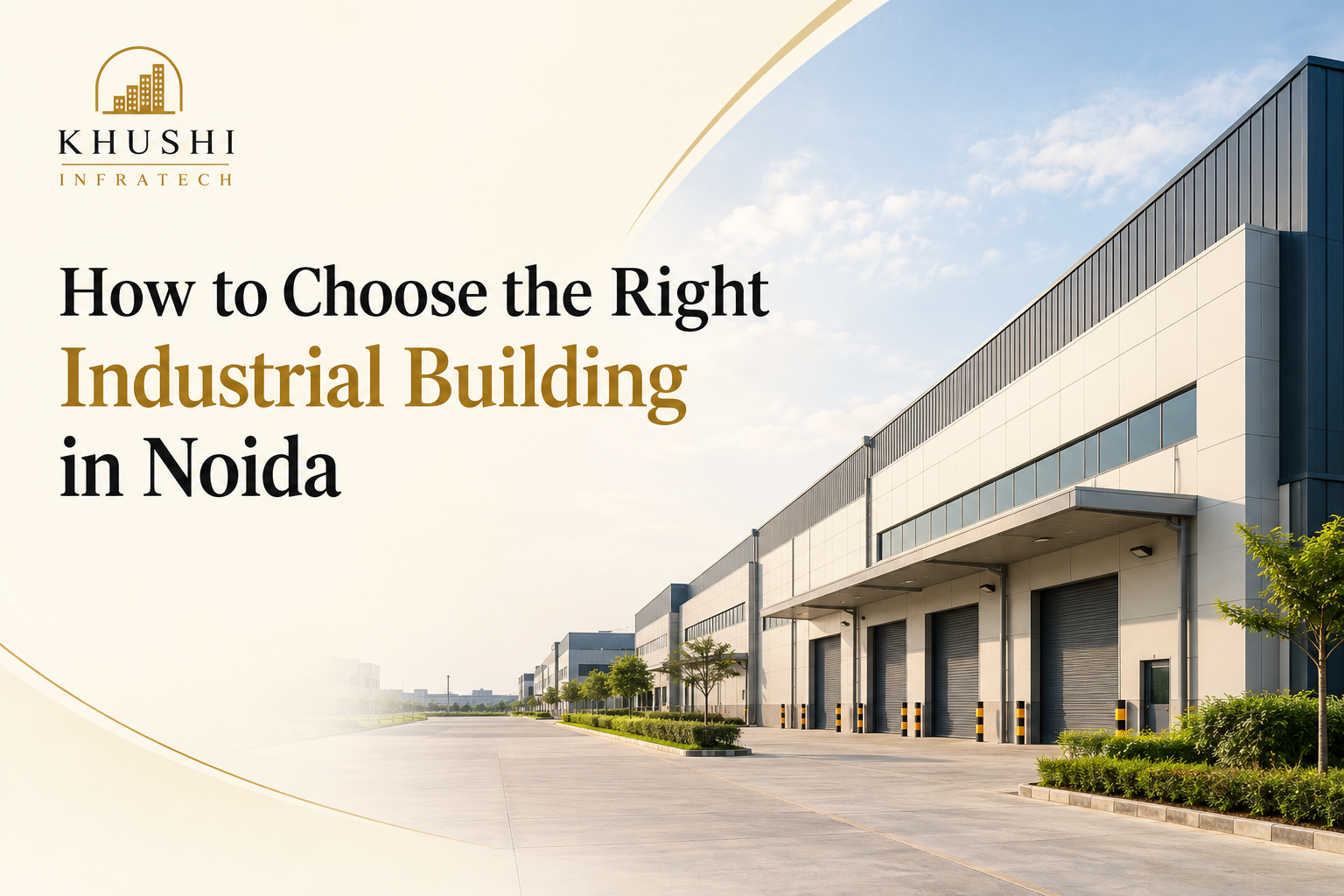
 Industrial Property
Choosing an industrial building is an important decision for any manufacturing company, logistics business or growing enterprise. The right property can support smooth operations, efficient transportation and future expansion. The wrong property can create unexpected costs, operational difficulties and compliance issues.
In Noida, industrial buildings differ in terms of location, road connectivity, power availability, building configuration and permitted use. Therefore, businesses should evaluate more than just the plot size, built-up area or monthly rent.
At Khushi Properties, we understand the importance of matching industrial infrastructure with business requirements. Here is a practical checklist to consider before selecting an industrial building in Noida.
1. Check Power Load and Electrical Infrastructure
Power availability is one of the first things to evaluate, particularly for manufacturing units, engineering companies and businesses using heavy machinery.
Before finalizing a building, consider:
- The sanctioned electrical load available at the property.
- Your machinery's connected load and expected peak demand.
- Whether additional load can be obtained, and the process and cost involved.
- Transformer capacity, electrical panels, cabling and backup requirements.
- Whether the existing electrical infrastructure meets your operational needs.
A warehouse with modest power requirements may be suitable for storage, but a manufacturing facility may need considerably more capacity.
**Practical tip:** Prepare your machinery and equipment load requirements before arranging property visits. Do not assume that additional power will automatically be available.
2. Evaluate Road Width and Transportation Access
Road access affects the movement of raw materials, finished goods, employees and delivery vehicles.
When assessing an industrial building, check:
- The width of the approach road.
- Whether trucks and other required vehicles can enter and exit comfortably.
- Turning space and access near the building entrance.
- Loading and unloading arrangements.
- Restrictions on vehicle movement, if any.
- Connectivity to major roads and relevant transport routes.
A property on a wider road may offer operational advantages, but the actual suitability depends on your vehicle sizes, traffic conditions and site layout.
3. Check Loading and Unloading Facilities
Efficient goods movement is essential for manufacturing and logistics operations.
Inspect the building to determine whether it has:
- Adequate loading and unloading space.
- Suitable entry gates and vehicle access.
- Space for goods handling and temporary staging.
- Appropriate goods lifts or material-handling arrangements where required.
- Sufficient circulation space to avoid disrupting other activities.
If your business regularly handles heavy machinery, pallets or bulk materials, assess the complete movement process from vehicle entry to the final storage or production area.
4. Assess Floor Strength and Building Configuration
Not every industrial building is designed for every type of operation.
Before selecting a property, verify:
- The floor's load-bearing capacity.
- The structural suitability of the building for your machinery.
- Floor condition, levelness and any visible damage.
- Clear height and usable floor area.
- Column spacing and the available production layout.
- Staircases, passenger lifts and goods lifts, as applicable.
- Basement suitability, if basement space is part of the requirement.
For heavy machinery or concentrated loads, obtain the relevant structural assessment instead of relying solely on verbal assurances.
5. Review Fire Safety and Emergency Access
Fire safety should be evaluated before a business commits to an industrial property.
Depending on the building, occupancy and proposed activity, verify:
- Applicable fire approvals and certificates.
- Fire detection and firefighting systems.
- Emergency exits and evacuation routes.
- Access for emergency vehicles.
- Electrical safety and other relevant installations.
- Any additional fire-safety requirements associated with your activity.
Requirements differ by building and use. Confirm the applicable approvals with the relevant authorities and qualified professionals before commencing operations.
6. Confirm Permitted Land Use and Business Activity
A property that appears physically suitable may not necessarily be approved for every business activity.
Before committing, verify:
- The property's approved land use.
- Whether your intended manufacturing, storage or commercial activity is permitted.
- Applicable building-plan approvals and occupancy requirements.
- Any relevant industrial-estate or authority conditions.
- Required environmental, pollution-control or operational permissions.
- Whether alterations or additional construction would be permissible.
Do not assume that a previous occupant's business approval automatically covers your proposed activity.
7. Examine Parking and Space for Employees
Parking and circulation requirements are easy to overlook during a property visit.
Consider the number of employees, visitors, delivery vehicles and company vehicles expected at the site.
Check whether the property offers adequate parking, internal circulation, safe pedestrian access and space for day-to-day operations.
For buildings with multiple floors, also assess how employees, materials and goods will move between levels.
8. Verify Property Documents and Commercial Terms
Document verification should be completed before entering into a binding transaction.
Depending on the property and transaction, relevant checks may include:
- Title or allotment documents and the authority's property records.
- Applicable transfer permissions and outstanding dues.
- Approved building plans and relevant completion or occupancy documentation.
- The permitted use and any restrictions on transfer, subletting or alterations.
- Existing mortgages, encumbrances or other interests, where applicable.
- The proposed lease or sale agreement and its commercial conditions.
For a lease, pay particular attention to the security deposit, lock-in period, rent escalation, maintenance responsibilities, repair obligations, permitted use and exit terms.
For a purchase, review the transaction structure, transfer requirements, applicable charges and any outstanding liabilities.
Engage a qualified legal professional to verify the documents and transaction-specific requirements.
9. Calculate the Total Cost of Occupancy
The quoted rent or purchase price is only one part of the financial decision.
Compare the overall cost, including relevant maintenance charges, electricity infrastructure, repairs, fit-outs, statutory compliance, transportation and any required modifications.
For leased properties, consider the total financial commitment over the proposed lease term. For purchased properties, consider the acquisition cost and the investment required to make the building operational.
A property with a lower asking price may not be the most economical option if it requires substantial additional expenditure.
10. Consider Future Expansion
Your current space requirement may change as production, staffing or storage needs grow.
Assess whether the property can accommodate additional machinery, increased inventory, more employees or changes to the operational layout.
Also consider whether the location and building configuration will continue to suit your business over the next several years.
Planning ahead can reduce the likelihood of another relocation sooner than expected.
Final Checklist Before Selecting an Industrial Building in Noida
Before making a decision, ensure that you have reviewed the following:
- [ ] Power availability and electrical infrastructure.
- [ ] Road access and vehicle movement.
- [ ] Loading and unloading facilities.
- [ ] Floor strength and structural suitability.
- [ ] Fire safety and emergency access.
- [ ] Parking and employee access.
- [ ] Permitted land use and applicable approvals.
- [ ] Property documents and transaction terms.
- [ ] Total occupancy or acquisition cost.
- [ ] Scope for future expansion.
The importance of each factor depends on the nature of your business. A manufacturing unit, a warehouse and a corporate facility may have very different requirements.
Conclusion
Choosing the right industrial building requires a careful assessment of location, infrastructure, permitted use, documentation and long-term operational needs.
Businesses should define their requirements before shortlisting properties and verify the important technical and legal details before making a commitment.
Khushi Properties assists businesses in evaluating industrial and commercial real-estate requirements in Noida.
A clear understanding of your business activity, preferred location, area, power requirement and budget can help make the property-selection process more focused.
You can contact Khushi Properties to discuss your requirements and understand the available options.
Website: www.khushiipropertiies.com
Phone: +91 9810479077